What does pressure washing cover?
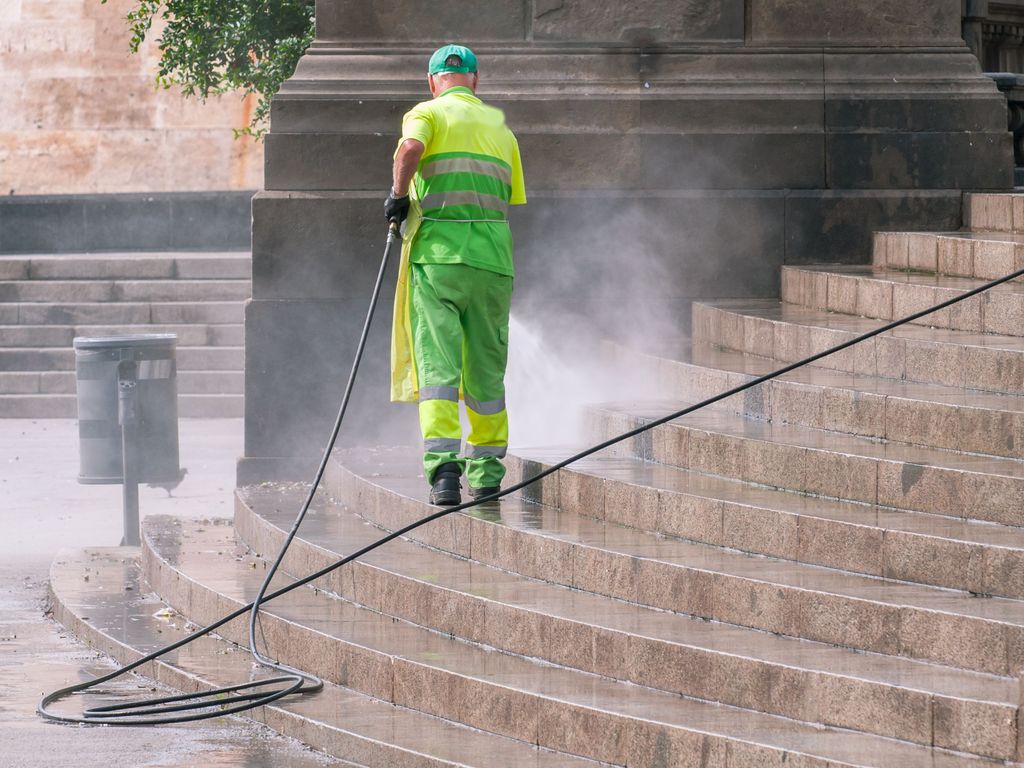
This service covers the vertical and structural surfaces that flat-surface cleaning misses: timber, Colorbond and metal fences, brick, block and rendered retaining walls, courtyard and boundary walls, stairs, landings and pool coping, plus garage and shed walls and hardstand areas. Growth is treated so it dies off, the surface is washed at a pressure matched to the material, and you receive before-and-after photos with notes on anything we noticed.
What is the difference between pressure washing and pressure cleaning?
It is the same crew and the same published rate card. Pressure cleaning covers flat ground surfaces such as paths, patios and pool areas, and driveways have their own page. Pressure washing covers the vertical and structural surfaces, because they need different access, different pressure and a different setup. Booked together in one visit, the extra service is discounted.
When should fences and walls be pressure washed?
Usually when the shaded side of a fence or the base of a retaining wall has gone green or black, or when steps and pool coping start to feel slippery after rain. Sydney’s humid summers push growth quickly on surfaces that never dry out, so south-facing and shaded surfaces come due first.
How do you wash fences and walls without damaging them?
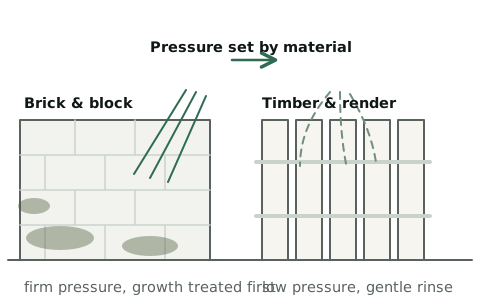
Pressure is chosen for the material, not for speed. Brick, block and concrete take firm pressure; timber, render, paint and sandstone get low pressure with the cleaner doing the work, so the grain does not raise and coatings stay intact. If we have not cleaned your surface before, we test an out-of-sight section first.
How much does pressure washing cost in Sydney?
It is priced by area from our published rate card, starting from $249 including GST, with typical jobs falling within $400–$640 (typical job: retaining wall or long fence, ~80 m²). Surface area, material, height and access, and how heavy the growth or staining is are what move the price. Your fixed price is confirmed in writing before we book.
Can you pressure wash a rendered or painted wall?
Not at high pressure. High pressure forces water behind render and lifts paint, so rendered and painted surfaces get a low-pressure soft wash instead. Roofs and rendered house walls are separate soft-wash services — roof cleaning and house washing — and can be done in the same visit.
Will pressure washing damage my timber fence?
High pressure raises the grain and leaves lines in softwood, so timber is always washed at low pressure. Where a fence is already weathered, flaking or rotting, cleaning will show that more clearly rather than hide it, and we tell you what to expect beforehand.
How do you work safely on retaining walls and around pools?
Terraced yards, retaining walls and pool areas often mean working on a slope or above a drop, so access is planned before the day. Where a section cannot be reached safely we leave it, tell you, and record the reason in your report. Runoff is kept away from pool water and garden beds as much as practical.
How long does it stay clean?
On surfaces that get sun, a year or more is common. Permanently shaded fences and wall bases green up faster, because the moisture never leaves. Trimming plants back from the surface so air can move makes the biggest difference, and treating the growth rather than just blasting it slows the return.
Do I need to be home?
Not usually. We need access to the surfaces and an outside tap. Unlock side gates, move anything fragile away from the fence line, and tell us if a tank collects water from any surface we will be washing.