What does roof cleaning include?
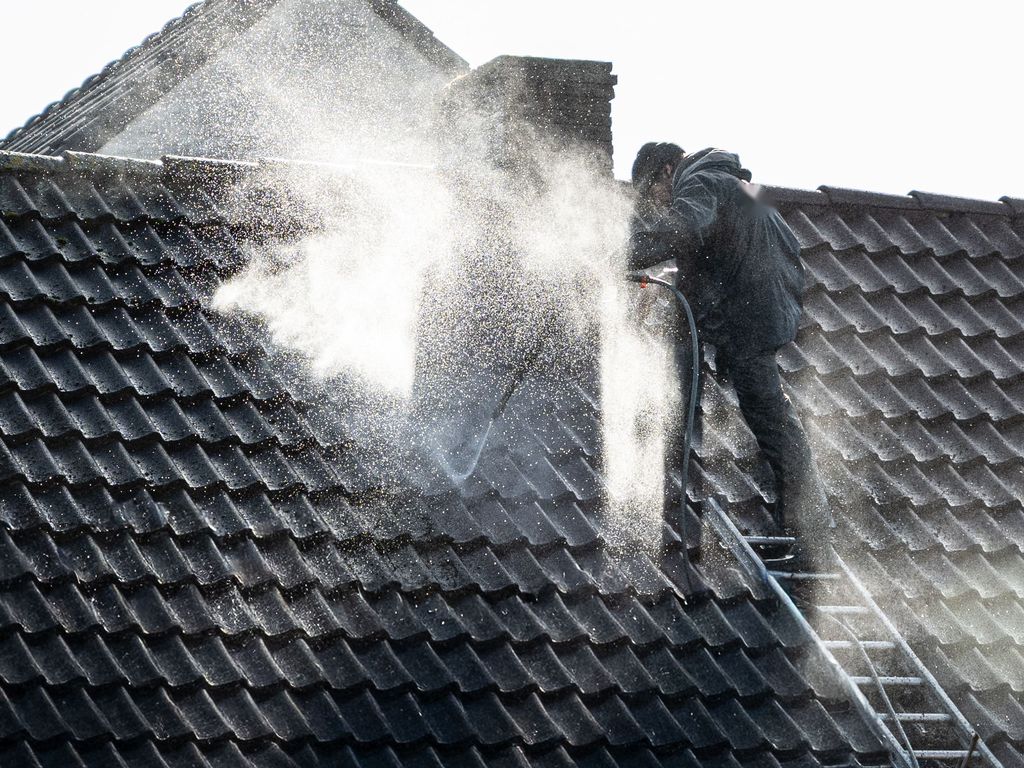
Our roof cleaning is a low-pressure soft wash that treats moss, lichen, algae and black streaks with a biodegradable cleaner, followed by a gentle rinse. It also covers diverting any downpipes that feed a water tank, protecting the garden, clearing loosened debris from the gutters and a photo report of each roof face. We clean and report only; we do not sell roof restoration or repairs.
Why should you clean your roof?
Moss and lichen keep tiles damp and can wear the surface coating over time, while loose growth washes into gutters and valleys and blocks them. Black streaks are usually algae, which is mostly cosmetic but makes a roof look older than it is. A clean roof also makes it easier to see cracked tiles, pointing or rust that growth was hiding.
When is the best time to clean a roof in Sydney?
A roof is due for a clean when moss, lichen or dark streaks are visible from the ground, most often on south-facing and shaded faces. A settled patch of weather suits a soft wash, because the cleaner needs time to work before heavy rain. It also makes sense before selling, or before a gutter clean, since the wash sends debris into the gutters.
How is a roof soft washed?
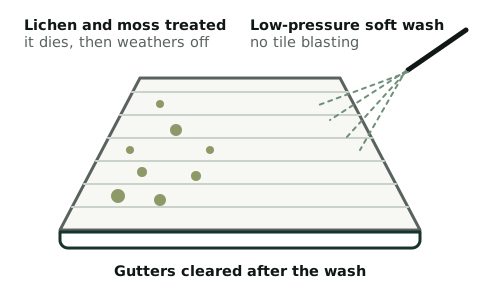
Soft washing kills moss, lichen and algae with a cleaner applied at low pressure, then rinses the roof gently instead of blasting the growth off. Before starting, we divert tank downpipes and wet down plants; after the rinse, we clear the gutters and photograph each face. The cleaner and technique are matched to the roof, whether terracotta, concrete tile or Colorbond.
How much does roof cleaning cost in Sydney?
Roof cleaning for most homes falls within $1,080–$1,620 (typical single-storey home, ~180 m²), with prices starting from $690 including GST. Roof area, storeys, pitch and the amount of growth are the main factors, and we measure from satellite images and your photos rather than needing a site visit. Your exact fixed price is confirmed in writing before we start.
How long does roof cleaning take?
Most roof cleans are done in a single visit, and the expected time is confirmed with your quote. Roof area, pitch, storeys, the amount of growth and working around tanks or solar panels all affect it. The roof keeps improving after we leave, because dead lichen can take several weeks of sun and rain to weather off completely.
Do I need roof cleaning or roof restoration?
If the roof is sound and simply dirty, cleaning is enough; restoration is for roofs with worn-out coatings, broken tiles or failing pointing. Concrete tiles whose colour has worn back to bare concrete will not look new after a clean, so it helps to know which you need before getting quotes. We only clean and report, so our photos show whether repairs are needed and you choose who does them.
Does roof cleaning include cleaning the gutters?
Yes, gutters are cleared after every roof wash we do, because the wash loosens moss and grit that ends up in them. Valleys we can safely reach are cleared too, and both are photographed afterwards. Solar panels on the roof are not sprayed with roof cleaner; they can be cleaned with pure water as a separate add-on on the same visit.
Does roof cleaning damage roof tiles?
A low-pressure soft wash is not meant to damage tiles, because it relies on the cleaner rather than the force of the water to remove growth. The damage usually comes from high-pressure cleaning, which can wear away the coloured coating on concrete tiles and drive water under tile laps. Tiles that are already cracked are photographed and pointed out to you before we start.
What are the risks of pressure washing a roof?
High-pressure washing can strip the surface coating from concrete tiles, erode porous unglazed terracotta and force water under laps and flashings into the roof space. On Colorbond and other metal roofs, abrasive scrubbing or a high-pressure nozzle can damage the paint finish. It also tends to remove only the surface growth, leaving roots in porous tiles to regrow.
What should I do after my roof has been cleaned?
Reconnect any water tank downpipes only after the first good rain has rinsed the roof, following the instructions we leave with you. Expect areas of heavy lichen to look patchy at first; the growth is dead and will weather off over the following weeks. To slow regrowth, trim overhanging branches, keep gutters clear and keep an eye on the shaded faces your report flags.